What We Do: Foundation Repair, Stabilization, and Waterproofing
At Pinnacle Home Services, we repair and strengthen slab foundations and raised (pier and beam) foundations, address crawl space and support issues, install piers and underpinning systems, and solve basement wall and waterproofing problems. We also perform seismic retrofits for properties that need better earthquake resistance.
Foundations and Structures We Work On
Slab foundations
Common in newer construction, slabs can crack, sink, or lift due to soil movement, moisture changes, or drainage problems. We repair cracks, stabilize slab settlement, and restore support where needed.
Raised foundations (pier and beam)
Many older homes and some custom builds sit on raised systems. When posts, pads, girders, or framing start to move, you can feel it as bouncy floors, sloping, or gaps at trim and door frames. We stabilize and level raised foundations and repair damaged support systems.
Crawl spaces
Crawl spaces can create both structural and crawl space moisture issues, especially when ventilation, drainage, or insulation is failing. We diagnose the root cause and recommend repairs that protect the structure long-term.
Basements and retaining walls
When water pressure builds behind walls or drainage is poor, it can lead to cracking, bowing, seepage, and long-term deterioration. We provide basement waterproofing and drainage solutions designed to keep water away from the foundation.
Common Foundation Problems We Solve
If you are noticing any of the common foundation issues below, it is worth getting a professional evaluation:
- Cracks in drywall, stucco, brick, or slab floors
- Doors or windows that stick, swing open, or will not latch
- Sloping or uneven floors, sagging areas, or soft spots
- Gaps between walls and ceilings, trim separation, or baseboards pulling away
- Stair-step cracks in masonry
- Standing water near the perimeter, moisture odor, or visible dampness in crawl spaces or basements
- Cracked tile or grout that keeps reappearing
These symptoms can have different causes, and the fix depends on what is driving the movement (soil, drainage, settlement, compromised supports, or water pressure). The fastest way to waste money is treating symptoms without confirming the cause.
Our Customer-First Approach: What to Expect
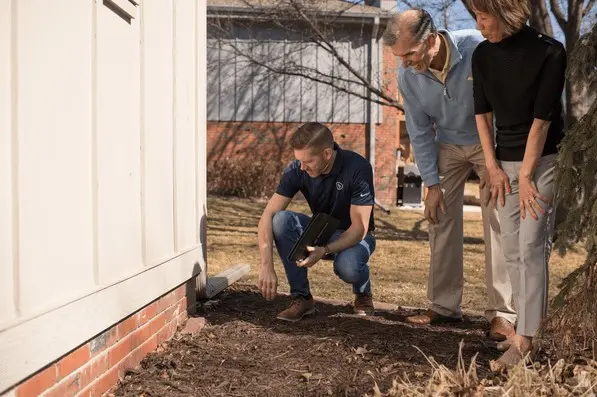
Step 1: Schedule an inspection
We set a time that works for you and show up ready to evaluate your foundation, not pressure you.
Step 2: Review findings and options
We walk you through what we found and what your next best move is, including urgency level and potential alternatives.
Step 3: Approve a repair plan
If repairs are needed, we provide a clear scope and pricing. If engineering or permits are required, we help coordinate the right path.
Step 4: Complete the work with minimal disruption
Foundation work can be stressful. We focus on clean execution, clear communication, and protecting your property while the work is underway.
Step 5: Final walkthrough and next steps
We review what was done, answer questions, and make sure you know how to maintain the result going forward.
How we evaluate your foundation
A solid repair plan starts with good information. Our evaluations are designed to be practical and easy to understand.
1) On-site foundation inspection
We examine the interior and exterior for telltale movement patterns, cracking types, and structural stress points.
2) Elevation readings
We use precision measurements (including laser-based methods when appropriate) to map high and low points and identify settlement patterns.
3) Root-cause checks
We look at drainage, moisture paths, soil-related factors, and any previous repairs, because foundation movement is often connected to what is happening around the building.
4) Clear recommendations
You get a straightforward explanation of what we found, what it means, and what your options are. If something can be monitored rather than repaired right away, we will tell you.
When engineering is needed, we can coordinate with licensed structural engineers so the repair plan meets code requirements and provides proper documentation.