If you are seeing cracks in drywall, separation around windows, doors that suddenly stick, or floors that feel like they slope, do not ignore it. In Sacramento and across Northern California, foundation problems often start small and get worse over time because our soils, seasonal rain, and hot dry summers create constant expansion and shrink cycles. A Sacramento foundation inspection helps you figure out whether you are dealing with normal settling or a sign of movement that needs repair.
Below is a practical, homeowner friendly guide to the most common raised and slab foundation repair methods. The right solution depends on what type of foundation you have (slab, crawl space, raised foundation), what the soil is doing, and what kind of movement is happening.
What Foundation Warning Signs Usually Mean
Not every crack is a crisis. Paint can crack and older homes can settle. But certain patterns tend to point to foundation movement:
-
Stair step cracks in brick or block
-
Diagonal wall cracks that start at the corners of windows or doors
-
Gaps between walls and ceilings or baseboards
-
-
Floors that slope, bounce, or feel uneven
-
Cracks in slab floors or garage slabs that widen over time
-
Moisture problems in a crawl space or standing water near the home
If the symptoms are new, getting worse, or showing up in multiple areas, it is time to schedule a professional inspection. A reputable foundation repair company should measure elevation changes, evaluate drainage, and look for soil or moisture issues before recommending any repair.
1) Slab jacking (mudjacking or polyurethane lifting)
Best for: Sunken concrete slabs like sidewalks, patios, driveways, garage floors, and some interior slabs.
Slab jacking is a lifting method. A contractor drills small holes in the sunken slab and pumps material underneath to raise it back to level. Traditionally this was done with a cement based slurry (mudjacking). Many companies now use expanding polyurethane foam, which can be lighter and more precise.
Why homeowners like it
-
Fast turnaround compared to major structural work
-
Minimal demolition
-
Often more affordable than replacing the slab
-
Great for exterior flatwork and trip hazards
Where it falls short
-
It does not fix the underlying soil issue if the soil continues to wash out or compress
-
It is not a great solution for major foundation settlement under the load bearing parts of a home
-
Some situations may need re-lifting in the future
Local tip: In parts of Northern California, poor drainage and runoff can wash out soil under exterior slabs. If the slab sank because water is eroding support, drainage correction is often just as important as lifting.
2) Piering (piling)
Best for: Significant foundation settlement, movement, or ongoing sinking.
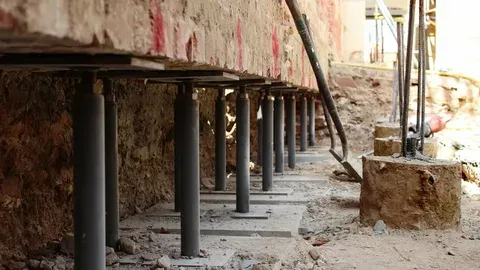
Foundation piering is one of the most common permanent solutions for serious settlement. The goal is to transfer the weight of the home from unstable surface soil to deeper, more stable bearing layers. Piers are installed under the foundation and can stabilize, and in some cases lift, sections of the home.
a) Push piers
Push piers are driven down using the weight of the home as resistance. They are installed under the footing and advanced until they reach stable strata or adequate resistance.
Pros
-
Strong long term stabilization for settlement
-
Can often lift and re-level portions of the foundation
-
Excellent for many residential foundations
Cons
-
More expensive than cosmetic repairs
-
Requires specialized equipment and an experienced crew
-
Not ideal where access is extremely limited
b) Helical piers
Helical piers look like large steel screws. They are rotated into the ground like a corkscrew until they reach suitable load capacity. They are often used when soil conditions make driving a push pier difficult, or where you need a pier solution that can be load tested during installation.
Pros
-
Reliable in a range of soil conditions
-
Load capacity can be verified during installation
-
Can work well for additions, porches, and lighter structures too
Cons
-
Higher cost
-
Requires professional design and installation
-
Not a quick DIY style fix
Expert’s note: A good contractor will explain why they chose push vs helical based on soil, access, and load. If you hear a one size fits all pitch, get a second opinion.
3) Concrete pier repair (poured concrete piers)
Best for: Common raised foundation support needs, heavier homes, or situations where poured piers are appropriate.
Concrete piers are created by excavating under the foundation, forming the pier, pouring concrete, and allowing it to cure. This is a classic approach and can be very effective when done correctly.
Pros
- Durable support when properly installed
- Can work well for larger or heavier homes
- Materials are familiar and proven
Cons
- Takes longer because concrete needs time to cure
- Excavation can be messy and labor intensive
- Not always the best choice if deep unstable soils require a deeper pier solution
4) Wall anchors
Best for: Bowing or leaning basement or retaining style foundation walls.
Wall anchors are used to stabilize and sometimes gradually correct basement wall movement. A contractor installs an interior wall plate and an exterior anchor in the yard, connected by a steel rod. Tightening the system helps pull the wall back toward plumb over time and prevents further movement.
Pros
- Strong stabilization for bowing walls
- Helps stop continued movement and cracking
- Can improve wall alignment over time
Cons
- Requires adequate yard space and soil access
- Not possible in every property layout
- Landscaping and exterior work may be needed
Local reality: Basements are less common in many Sacramento area homes, but retaining walls and partial below grade walls do exist. Water pressure behind a wall is often the real cause. That is why drainage solutions matter here too.
5) Carbon fiber strips
Best for: Minor wall bowing and small to moderate cracking where the wall still has integrity.
Carbon fiber strips are high strength materials bonded to the wall to resist further movement. They are low profile and do not require exterior excavation.
Pros
- Clean look and minimal disruption
- Fast installation
- No digging in many cases
Cons
- Best for minor to moderate conditions, not severe bowing
- Does not correct the wall, it stabilizes it
- The underlying causes like hydrostatic pressure still need to be addressed
6) Soil stabilization
Best for: Soft, loose, or poorly compacted soil beneath or near the foundation.
Soil stabilization strengthens the soil to reduce settlement risk. Methods vary. Some involve injecting materials into the soil to improve bearing capacity, while others address moisture management to reduce soil movement.
Pros
- Can reduce future settlement risk
- Often less invasive than structural reconstruction
- Useful as part of a bigger repair plan
Cons
- Rarely a standalone cure for significant structural movement
- Needs expert evaluation and the right soil testing or site assessment
- Results depend on correct application and correct diagnosis
Important: If a contractor wants to sell soil stabilization without showing you why the soil is the problem, slow down. Ask for measurements and an explanation.
7) Foundation Underpinning
Best for: Uneven settlement and foundations that need additional support beneath existing footings.
Underpinning is a broad term for strengthening an existing foundation by adding support below it. This can be done with piers, enlarged footings, or other engineering solutions depending on the structure. Underpinning can stabilize the home and in some cases lift.
Pros
- Long term structural solution for serious settlement
- Addresses deeper support needs
- Often the right approach for homes with major elevation changes
Cons
- More time consuming
- Often requires heavy equipment or extensive excavation
- Needs skilled design and installation
8) Drainage correction
Best for: Water issues near the foundation, moisture intrusion, and preventing future foundation damage.
In Northern California, water is one of the biggest drivers of foundation problems. During winter storms, water collects near the home. In summer, soils dry out and shrink. That cycle can cause movement, especially in expansive clay soils. Drainage correction helps control that cycle.
Common drainage upgrades include:
- French drains or perimeter drains
- Downspout extensions to move roof runoff away from the home
- Regrading the yard so water flows away from the foundation
- Improving surface drainage around patios, driveways, and side yards
- Crawl space moisture control measures when needed
Pros
- Helps prevent future settlement and moisture damage
- Extends the lifespan of other foundation repairs
- Often improves crawl space conditions and indoor air quality
Cons
- Does not undo structural damage that already happened
- May require ongoing maintenance like gutter cleaning
- Needs to be properly designed for your property slope and soil
Reality check: If you fix structural movement but ignore drainage, you are asking the same problem to come back.
How a good foundation repair plan is chosen
A trustworthy Sacramento foundation repair company should do more than glance at a crack and quote a pier job. The process should include:
- Interior and exterior crack review with notes on pattern and severity
- Floor elevation readings to map high and low points
- Crawl space or perimeter inspection to look for moisture, rot, or footing issues
- Drainage and grading evaluation including gutters and downspouts
- A clear explanation of which repair matches which symptom and why
You should walk away understanding:
- What is happening
- Why it is happening
- What the repair will do
- What it will not do
- How they will prevent the issue from returning
What to do next if you are seeing signs of movement
If you are in Sacramento or anywhere in Northern California and you are noticing sticking doors, sloping floors, or cracks that are widening, schedule an inspection sooner rather than later. Foundation problems are usually cheaper to fix when they are caught early, and the inspection will help you avoid wasting money on a repair method that does not match the real cause.