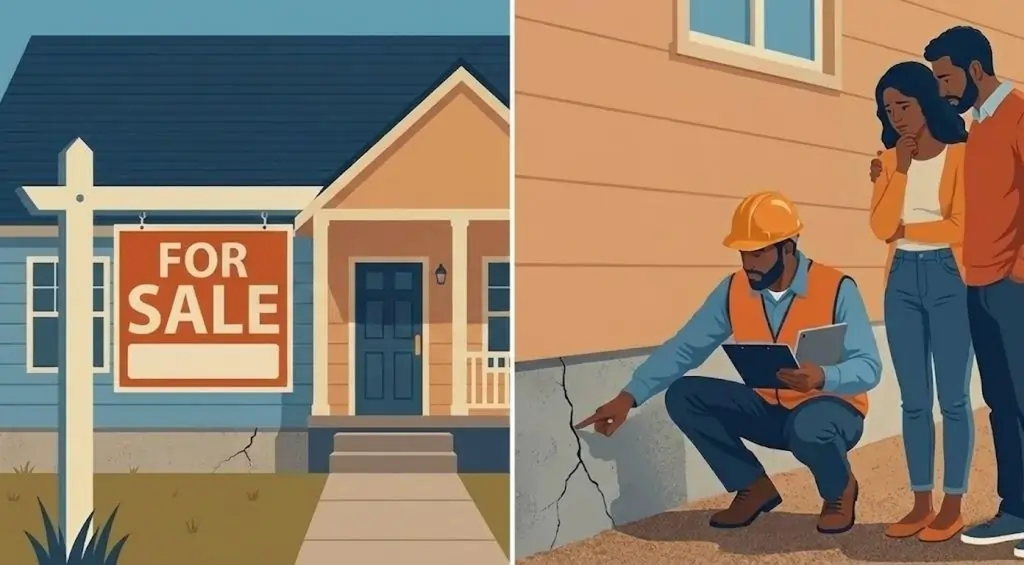
But here is the truth: Foundation issues are not always a deal-breaker. In fact, in areas like Sacramento, where expansive clay soils are common, they are incredibly routine.
Whether you are looking to offload a property with a sloping floor or hoping to snag a deal on a “fixer-upper” with cracks in the stucco, you need to understand the rules. This guide covers the specific California laws you must follow, the financing hurdles you will face, and the negotiation strategies that can save the deal.
For Sellers: The Law, The Risks, and The “As-Is” Myth
If you are selling a home with foundation problems, your strategy comes down to one word: Disclosure.
1. California Civil Code 1102: The TDS
California has some of the strictest disclosure laws in the country. Under California Civil Code § 1102, sellers of single-family homes are required to complete a Transfer Disclosure Statement (TDS).
This document is not optional. It asks you specifically if you are aware of any significant defects/malfunctions in the “Home Foundation or Support System”.
- The “Material Fact” Standard: In California, a material fact is anything that would affect the value or desirability of the property. A crack in the stem wall, a door that sticks every summer, or a floor that slopes, these are all material facts.
- The Consequence of Hiding It: If you paint over a crack or hide a water stain without disclosing it, you are opening yourself up to a lawsuit for fraudulent misrepresentation. Buyers can sue for the cost of repairs, legal fees, and in rare cases, “rescission”, forcing you to buy the house back.
2. The “As-Is” Misconception
Many sellers believe that listing a home “As-Is” protects them from liability. This is false.
In California, selling “As-Is” simply means you are not agreeing to fix the defects before closing. It does not exempt you from the legal requirement to disclose them. You can sell a house with a crumbling foundation “As-Is,” but you must tell the buyer it is crumbling. If you fail to do so, the “As-Is” clause will not protect you in court.
3. To Fix or Not to Fix?
Should you repair the foundation before listing?
- The Case for Fixing: A home with a certified structural repair and a warranty often sells for full market value. It removes the “fear factor” for buyers and qualifies the home for FHA/VA financing.
- The Case for Discounting: If you cannot afford the $10,000–$20,000 repair, you can price the home below market value. However, realize that you are shrinking your buyer pool to cash investors or those with specialized renovation loans.
For Buyers: Due Diligence and Red Flags
If you are eyeing a home with potential structural issues, do not rely on the seller’s word, or even the general home inspector’s word.
1. The “General Inspection” Gap
A general home inspector is a generalist. They will spot a crack and write “consult a specialist” on their report. Do not stop there. You need to hire a Structural Engineer or a specialized Foundation Repair Contractor.
- What they look for: While a general inspector looks at the surface, we look at the stress points. We measure the elevation variance (how much the floor dips), check the crawl space for “efflorescence” (white powder indicating water intrusion), and assess if the crack is active (moving) or passive (settled).
2. Red Flags in Sacramento Homes
In our area, specifically with our clay-heavy soil, look for these tell-tale signs or a compromised foundation:
- The “Stair-Step” Crack: A crack in brick or stucco that looks like a set of stairs. This usually means one part of the footing is sinking while the rest stays put.
- Sticking Doors/Windows: If the seller says, “Oh, that door always sticks in the summer,” that is a major red flag. It means the soil is swelling and heaving the foundation frame.
- Gaping Trim: Look at where the baseboards meet the floor. If there is a noticeable gap, the floor may be sagging.
The Financing Hurdle: FHA and VA Loans
This is the most critical hurdle in the transaction. If the buyer is using a government-backed loan, a bad foundation can kill the deal instantly.
- FHA & VA Requirements: Both the Federal Housing Administration (FHA) and the Department of Veterans Affairs (VA) have “Minimum Property Requirements” (MPRs).
- The home must be “safe, sound, and sanitary.”
- An appraiser must flag any sign of structural defects. If they see a significant crack, they will require a structural inspection.
- The Deal Killer: Unlike conventional loans, FHA/VA loans will not fund until the repair is completed. You cannot simply “negotiate a credit” and close. The work must be done and certified before the money is released.
The Solution: If you are buying a home with foundation issues using an FHA loan, consider an FHA 203(k) Renovation Loan. This allows you to borrow the money for the purchase and the repairs in a single mortgage, and the work is done after closing.
Negotiation Strategies: Credit vs. Repair
Once the issue is identified, the negotiation begins. There are two ways to handle the cost of repairs:
Option 1: Seller Repairs Prior to Closing
- Pros: The buyer gets a move-in ready home; the home qualifies for all financing types.
- Cons: The seller has to pay cash upfront.
- Tip: Ensure the seller uses a reputable company (like Pinnacle Home Services) that offers a transferable warranty. If the warranty doesn’t transfer to the new owner, the repair loses value.
Option 2: Seller Credit (Price Reduction)
- Pros: The seller doesn’t have to manage the construction; the buyer gets to choose their own contractor.
- Cons: The lender might not allow a large credit if the work is structural.
- Tip: Buyers often prefer this because they control the quality of the work. If the repair costs $15,000, ask for a $15,000 price reduction, but realize you cannot use that “savings” to pay the contractor. The reduction just lowers your mortgage payment; you still need the cash on hand to pay us to do the work.
The “Clay Bowl” Effect: Why This Happens in the Sacramento Area
Why is this so common in the Northern California region? It usually comes down to water. Many homes in our area were built by digging out a square of hard-packed clay and backfilling it with loose soil. This creates a “clay bowl” effect. When it rains, water flows into that loose soil and gets trapped by the hard clay underneath. This turns the soil under your foundation into mud, causing the house to sink. Conversely, in our hot summers, that clay dries out and shrinks, pulling away from the footing.
The Good News: Most of these issues are solvable. Whether it is foundation underpinning (installing steel piers to reach stable soil deeper down) or poly-lifting (injecting foam to lift sinking slabs), modern engineering can stabilize almost any home.
Summary Checklist
For Sellers:
- [ ] Pre-inspect: Get a foundation inspection before listing so you aren’t blindsided.
- [ ] Disclose: Fill out the TDS honestly. If in doubt, disclose it.
- [ ] Choose: Fix it for top dollar, or discount it for a quick cash sale.
For Buyers:
- [ ] Inspect: Never skip the foundation inspection on a home older than 20 years.
- [ ] Finance: Check with your lender immediately if the report shows structural damage.
- [ ] Negotiate: Use the repair quote as leverage to lower the price.
Need a professional opinion on a property you are buying or selling? At Pinnacle Home Services, we specialize in real estate transaction inspections. We provide clear, honest reports that satisfy lenders and help you make informed decisions. Contact us today to schedule your foundation evaluation.
Disclaimer: Pinnacle Home Services is a licensed contractor, not a law firm. This article is for informational purposes only and does not constitute legal advice. For specific questions regarding your Real Estate Transfer Disclosure Statement, please consult a qualified California real estate attorney.