
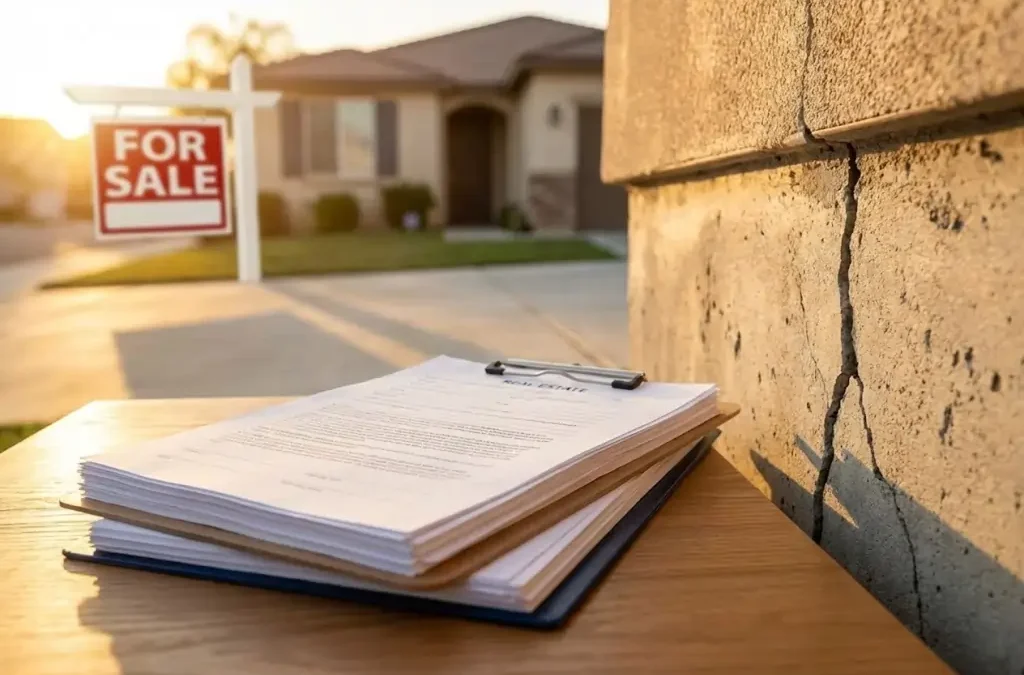
In the world of real estate, there is one “F-word” that strikes fear into the hearts of sellers more than any other: Foundation.
If you are preparing to sell your home in Sacramento, Roseville, or anywhere in California, discovering a foundation issue can feel like a deal-killer. You might be staring at a crack in the stem wall or a sloping floor in the hallway and wondering: Do I have to tell the buyer? Can I just sell it “as-is” and let them deal with it?
As foundation professionals, we are not lawyers. However, we work alongside real estate agents and structural engineers every day. We have seen deals collapse because a seller tried to hide a crack, and we have seen homes with massive structural repairs sell for full asking price because the paperwork was perfect.
Here is the reality: In California, you cannot hide a foundation problem. The law is strict, the paperwork is specific, and the consequences for non-disclosure can haunt you for years after close of escrow.
This guide will walk you through the California Transfer Disclosure Statement (TDS), the myth of “As-Is” selling, and how to successfully sell a home with foundation issues in the Golden State.
The Rule: California Civil Code 1102
The backbone of selling a home in California is the Real Estate Transfer Disclosure Statement, commonly known as the TDS. This isn’t just a suggestion; it is a mandate under California Civil Code § 1102.
This law essentially ends the old era of “Caveat Emptor” (Buyer Beware). In California, the burden is on the seller to voluntarily disclose any “material facts” that could affect the value or desirability of the property.
What is a “Material Fact”?
In the eyes of a judge, a material fact is anything that would cause a reasonable buyer to lower their offer or walk away from the deal. Foundation issues are the definition of a material fact.
If you know your floor slopes, you must disclose it. If you know a previous owner installed piers in 1995, you must disclose it. If you patched a crack in the stucco three years ago, you must disclose it.
The Statute of Limitations
Many sellers believe that once the check clears and the keys are handed over, they are safe. This is false. In California, the statute of limitations for “breach of contract” (failing to disclose) is generally four years. However, if a buyer can prove “fraud” (meaning you intentionally hid a defect), the clock starts ticking three years from the date of discovery.
That means a buyer could find a crack five years from now, prove you painted over it, and sue you for the cost of the repair, plus legal fees.
The Selling "As-Is" Myth
This is the most common misconception we hear from homeowners: “I’m selling the house ‘As-Is,’ so I don’t need to mention the cracks. The buyer is accepting the house in its current condition.”
This is dead wrong.
In California real estate, “As-Is” simply refers to the condition of the property, not the disclosure requirements. Selling “As-Is” means you are telling the buyer: “I am not going to pay for any repairs.” It does not mean: “I don’t have to tell you what’s broken.”
Even in an “As-Is” sale, you are legally required to provide a completed TDS form. You cannot contract your way out of the law. If you sell a house “As-Is” but fail to mention that the foundation is sinking, you can still be sued for fraud.
Navigating the TDS Form (Section B)
When you sit down with your listing agent, they will hand you the TDS form. Pay close attention to Section B.
This section explicitly asks: “Are you (Seller) aware of any significant defects/malfunctions in any of the following?” There is a specific checkbox for Foundation/Slab(s).
How to Fill This Out
If you check “Yes,” you must provide an explanation. This is where honesty saves you.
- Bad Example: “Some settling.” (Too vague).
- Bad Example: [Checking “No” when you know there is a crack]. (This is fraud).
- Good Example: “Hairline cracks noted in garage slab. Small vertical crack in master bedroom exterior stucco patched in 2021. See attached reports.”
The “AVID” Check
Your real estate agent also has a legal duty. Under California law, agents must conduct a “reasonably competent and diligent visual inspection” of the property. This is called the AVID (Agent Visual Inspection Disclosure).
If your agent walks through the living room and feels a “rollercoaster” floor, they are legally required to write that down, even if you don’t. Do not ask your agent to overlook these signs; you are asking them to risk their license.
The Strategy: Fix It or List It?
Once you acknowledge you have a foundation issue, you have two paths forward. Both are valid, but they attract different buyers.
Option 1: The “Fix & Warrant” Strategy (Highest Sale Price)
This involves hiring a company like Pinnacle Home Services to repair the foundation before you list.
- The Process: We install push piers or helical piers to stabilize the home. We patch the concrete and provide a clean structural engineering report confirming the house is stable.
- The Benefit: You can list the home at full market value. In fact, a repaired foundation often comes with a transferable warranty. You can hand the buyer a certificate saying, “This foundation is guaranteed for 25 years.” That turns a negative into a positive.
- Best For: Sellers who want top dollar and have the time/cash to handle repairs upfront.
Option 2: The “Disclose & Discount” Strategy (Fastest Sale)
You list the home with the defect fully disclosed and price it accordingly.
- The Process: You hire a structural engineer or a foundation contractor to perform a foundation inspection. You upload that report to the MLS so every potential buyer sees it before they even visit.
- The Benefit: You don’t have to manage construction. You attract cash buyers and investors who are looking for a deal.
- The Risk: Most traditional lenders (FHA/VA) will not lend on a home with “structural deficiencies.” This shrinks your buyer pool significantly, often forcing you to accept a lower cash offer.
- Best For: Inherited properties, distress sales, or sellers who just want out.
Sacramento Specifics
If you are selling in the Greater Sacramento area, you have a unique advantage: Everyone knows about the soil.
Local buyers and agents are educated about our “hardpan” clay. They know that almost every house in Land Park (built in the 1940s) has some floor slope. They know that Natomas homes (built on former rice paddies) often have slab cracks.
Because of this, Sacramento buyers are often less “spooked” by minor settling than buyers in other parts of the country.
- Minor Settling: Often considered “normal” for the area. As long as it is disclosed, it rarely kills a deal.
- Structural Failure: If the settling is active (moving right now), that is a different story.
Pro Tip: If you have a crack that hasn’t moved in 10 years, it is helpful to have a structural engineer state that in writing. A report saying “Signs of historic settlement, no active movement observed” is golden for a seller.
A Note on Previous Repairs
What if you bought the house 10 years ago, and the previous owner fixed the foundation? Do you have to disclose that?
Yes. Even if the repair is perfect, the fact that the house has been repaired is a material fact.
- The Good News: If the previous work was done by a reputable company, there is likely a warranty attached to the property. Dig through your closing papers. Finding that warranty document can be a huge selling point.
- The Bad News: If the previous work was unpermitted DIY work by “Uncle Bob,” you need to disclose that too. You might say: “Previous owner performed repairs to the NE corner. No documentation available. Buyer to verify.”
Summary
Selling a home is stressful enough without worrying about a lawsuit arriving in your mailbox three years from now.
The safest, smartest, and most profitable way to sell a home with foundation issues in California is aggressive transparency.
- Inspect: Get a professional foundation evaluation before you list. Know exactly what you are dealing with.
- Disclose: Put it all in the TDS. If you are unsure if you should mention it, mention it. Over-disclosure protects you.
- Decide: Fix it with a warranty, or price it for an “as-is” cash buyer.
Do you need a pre-listing foundation evaluation? At Pinnacle Home Services, we work with sellers and real estate agents across Sacramento to provide clear, honest foundation assessments. Whether you need a repair estimate to negotiate a price or a clean bill of health to close the deal, we can help.