
For most homeowners, the foundation is out of sight and out of mind, until a door will not latch or a jagged crack appears in the drywall. When this happens, many people default to one word: settling.
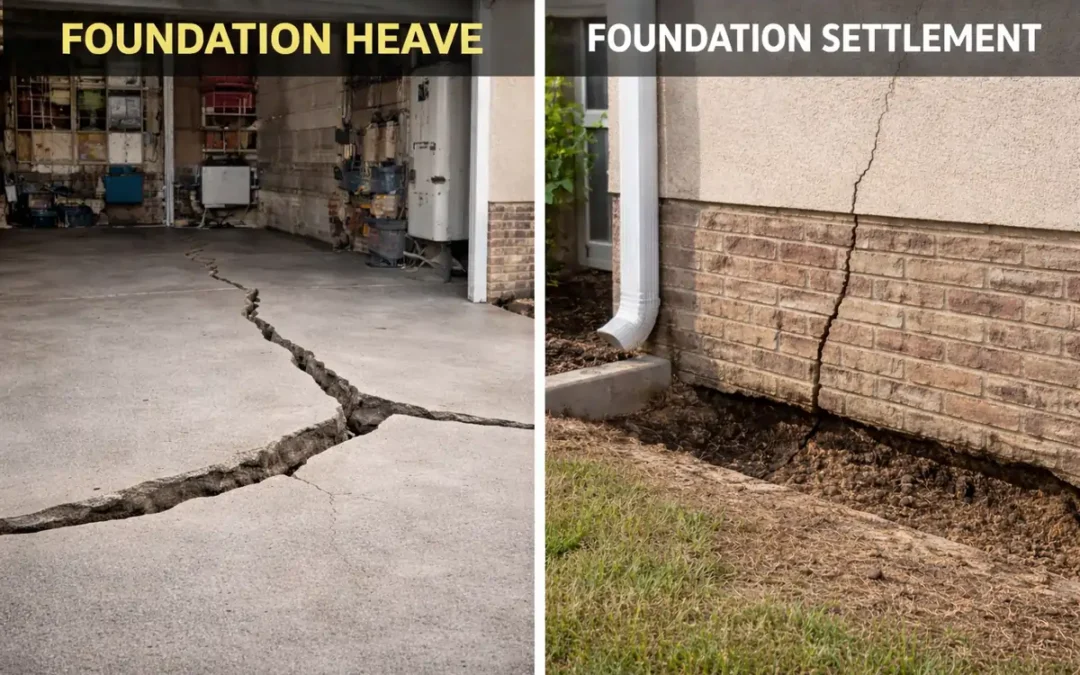
In reality, foundation movement is not a single phenomenon. Your home is locked in a constant, silent tug-of-war with the soil beneath it. On one side is foundation settlement, where the structure sinks downward. On the other is foundation heave, where the soil pushes upward against the foundation.
Both problems can produce similar symptoms, but their causes, mechanics, and repair strategies are completely different. Understanding the difference is critical if you want the right solution and not an expensive mistake.
What is Foundation Settlement?
Foundation settlement refers to the downward movement of a structure caused by changes in the soil supporting it. Nearly every home experiences a small amount of natural settlement during the first few years after construction. This type of uniform movement is usually harmless.
Settlement becomes a structural issue when it is differential, meaning one part of the home is moving more than another. Differential settlement places stress on walls, floors, and framing, which leads to visible damage.
The Primary Causes of Foundation Settlement
- Soil Desiccation (Shrinkage): In clay-rich soils, prolonged dry conditions cause moisture loss. As the soil dries, it shrinks and pulls away from the foundation, creating voids. The weight of the structure then causes the foundation to drop into these gaps.
- Inadequate Compaction: If the soil was not properly compacted before the foundation was poured, the trapped air pockets will slowly collapse under the weight of the house. This is common in newer construction and areas with engineered fill.
- Soil Erosion: Water from plumbing leaks, poor drainage, or downspouts dumping water near the foundation can wash away supporting soil. This leaves sections of the foundation unsupported and prone to sinking.
- Transpiration: Large trees near a home act like powerful moisture pumps. As roots draw water from the soil, localized drying occurs beneath the foundation, leading to uneven settlement.
What is Foundation Heave?
Foundation heave is the upward movement of a foundation caused by soil expansion. This occurs when the soil beneath the structure gains moisture or freezes and expands with enough force to lift concrete slabs or footings.
Heave is most common in areas with expansive clay soils or extreme moisture fluctuations.
The Primary Causes of Heave
- Excessive Moisture: When clay-heavy soil gets wet, it acts like a sponge, expanding in volume. This often happens after a long drought followed by heavy rain, or due to a hidden plumbing leak under the slab.
- Frost Heave: In colder climates, water in the soil freezes and expands by approximately 9%. This “ice lens” creates immense upward pressure that can lift even the heaviest residential structures.
- Tree Removal: Ironically, removing a large tree can cause heave. Without the tree to drink up the groundwater, the soil becomes “re-hydrated” and swells upward.
- Stress Relief: When a large amount of soil is excavated for a new build, the underlying layers “rebound” upward once the weight of the original earth is removed.
Comparison: Settlement vs. Heave
While both issues lead to cracked walls and sticking doors, the “mechanics” of the damage are different.
| Feature | Foundation Settlement | Foundation Heave |
| Direction | Downward | Upward |
| Primary Driver | Gravity / Soil Shrinkage | Soil Expansion / Moisture |
| Common Soil | Loose fill, drying clay, sand | Expansive clay, frozen wet soil |
| Crack Orientation | Often diagonal or “stair-step” | Often vertical or floor-bulging |
| Floor Symptom | Sloping or dipping | Bulging or “doming” in the center |
Identifying the Symptoms
To the untrained eye, a crack is just a crack. However, looking closely at the patterns can help you identify which force is at work.
Signs of Foundation Settlement:
- Stair step cracks in exterior brick or block walls following mortar joints
- Gaps forming at the top of door frames or between walls and ceilings
- Tilting or separating chimneys, especially if built on separate footings
- Diagonal interior drywall cracks extending from door or window corners
Signs of Foundation Heave:
- Vertical cracks in slab floors that appear pushed upward from the center
- Doors that bind or jam at the top of the frame
- Floor slabs forming a noticeable peak or dome
- Bowing or inward movement of foundation walls caused by lateral soil pressure
Why the Distinction Matters for Foundation Repairs
Misdiagnosing the problem can lead to costly mistakes.
Settlement and heave require completely different foundation repair strategies. Installing underpinning piers on a home experiencing heave may permanently lock the structure into an elevated position and worsen the damage. Conversely, moisture management alone will not fix a home that is actively sinking.
- Repairing Settlement: The goal is to reach stable soil or bedrock. This is usually done with Push Piers or Helical Piers that act like stilts, transferring the house’s weight past the unstable soil.
- Repairing Heave: The goal is moisture management and stabilization. This often involves improving drainage, installing French drains, or using soil stabilizers (like potassium injections) to stop the clay from reacting to water. In severe cases, “Slab Jacking” or strategic excavation may be required to relieve the pressure.
The Homeowner’s Prevention Checklist
Regardless of whether your soil tends to shrink or swell, moisture control is the most important factor in foundation health.
- Ensure downspouts discharge at least five to ten feet from the foundation
- Maintain proper grading so soil slopes away from the home
- Avoid letting clay soil dry completely during droughts, then flood it with heavy irrigation
- Use soaker hoses during extended dry periods to maintain consistent moisture
- Keep large trees planted at a distance equal to their mature height from the foundation
Conclusion
Foundation movement is an inevitable part of owning a home, but it does not have to become a catastrophe. By understanding the difference between foundation settlement and foundation heave, you can communicate effectively with professionals and ensure the correct repair strategy is used.
If you notice cracks wider than one eighth of an inch, doors that no longer operate properly, or floors developing a noticeable peak or valley, it is time for a professional evaluation.
Pinnacle Home Services provides comprehensive, no cost foundation inspections throughout the region. Our experienced inspectors assess soil conditions, measure floor elevations using digital equipment, and provide clear, honest recommendations based on the true cause of movement.
Contact Pinnacle Home Services today to schedule your foundation inspection and protect your home from further damage.
What is the difference between foundation settlement and foundation heave?
Are stair step cracks a sign of settlement or heave?
Can foundation heave be fixed with underpinning piers?
How can I tell if my foundation problem is getting worse?