
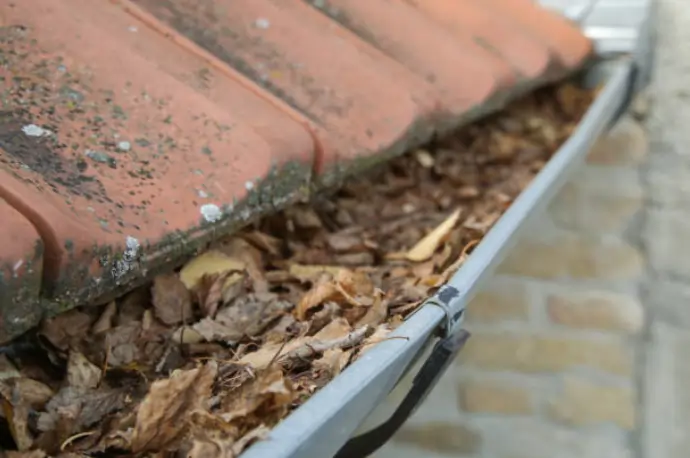
They are high up, out of sight, and generally unexciting, until they fail. In Sacramento and the surrounding Valley, where our clay soil reacts violently to moisture changes, your gutter system is not just an accessory for your roof; it is the first line of defense for your foundation.
The reality of home ownership is that water is the enemy. Specifically, uncontrolled water. While we can’t stop the rain, we can control where it goes. And that is exactly why a $50 plastic downspout extension could save you $50,000 in slab foundation repair.
What Happens to the Soil When It Rains in Sacramento?
To understand why gutters matter so much, you first have to understand the ground you are standing on. Most of Sacramento, Roseville, and Elk Grove is built on expansive clay soil (often called “hardpan” or adobe clay).
Think of this soil like a kitchen sponge. When it is dry (like in August), it shrinks and hardens. When it gets wet (like in January), it swells up. This expansion is powerful enough to lift concrete, crack stucco, and twist lumber.
The problem isn’t necessarily that the soil gets wet; the problem is when it gets wet unevenly.
If you have no gutters, or if your gutters are clogged, rainwater sheets off your roof and hits the ground in a concentrated line right next to your foundation stem wall. This creates a “mud moat” around the perimeter of your house. The soil directly under your footing swells rapidly, while the soil ten feet away remains relatively stable.
This differential movement causes “heave.” The wet soil pushes up on the edge of your slab, while the center of your house stays put. Eventually, the concrete snaps. This is when you start seeing the tell-tale signs: stair-step cracks in your brick, doors that won’t latch, and windows that suddenly stick.
How Bad Drainage Can Negatively Affect Your Foundation
When we come out to inspect a failing foundation, one of the first things we look at isn’t the concrete, it’s the downspouts. We often find that the structural damage lines up perfectly with a gutter that has been dumping water in the wrong spot for years.
There are three main ways poor drainage destroys a foundation:
1. Hydrostatic Pressure
When water pools next to your foundation, it saturates the soil. As that water accumulates, it gets heavy. This weight creates “hydrostatic pressure” that pushes sideways against your foundation walls. If you have a basement or a deep crawl space with moisture problems, this pressure can eventually bow the walls inward or force water through microscopic cracks in the concrete, leading to efflorescence (that white, powdery residue) and mold.
2. Erosion and Washout
On the flip side, water moving too fast can be just as dangerous. If a clogged gutter creates a “waterfall” effect, or if a downspout is pointing directly at the ground without a splash block, it can wash away the soil supporting your foundation footing. Over time, this creates a void. With nothing to rest on, the concrete corner of your house will eventually snap off and settle into the hole.
3. The "Clay Bowl" Effect
When a home is built, the contractor digs a hole larger than the foundation. After the concrete is poured, they fill the gap with loose “backfill” soil. This backfill is much more porous than the undisturbed virgin soil around it. If your gutters dump water right next to the house, that loose soil acts like a pool, trapping the water against your concrete. The water sits there, saturating the clay, causing that damaging cycle of expansion we discussed earlier.
The Golden Rule: Keep Water "4 to 6 Feet Away"
So, what is the solution? It is surprisingly simple: Get the water away.
Many homes in Sacramento are sold with downspouts that end right at the base of the wall. This is a recipe for disaster. For a downspout to be effective, it needs to transport water at least 4 to 6 feet away from the foundation before releasing it.
The Zone of Influence
Engineers refer to the soil immediately surrounding your foundation as the “zone of influence.” This is the critical area where moisture changes will directly impact your structure. If you are dumping roof water inside this zone, you are actively watering your foundation issues.
Types of Extensions
You don’t need a degree in engineering to fix this. You have three common options:
- Splash Blocks: These are the concrete or plastic ramps you see under downspouts. Warning: Most of them are only 12-18 inches long. They are better than nothing, but rarely sufficient for heavy Sacramento storms.
- Flexible Corrugated Pipe: These are the black plastic “accordions” you can attach to the end of a downspout. They are ugly, but they are cheap and effective. You can easily bend them to route water 6 feet out into the yard.
- Rigid PVC Extensions: This is the pro choice. Using standard 4-inch PVC pipe (or rectangular gutter adapters), you can create a clean, straight line that carries water far away. If you are feeling ambitious, you can bury these pipes underground and have them “pop up” near the street or a storm drain.
Warning Signs Your Gutters Are Failing
You don’t always need to climb a ladder to know your gutters are putting your foundation at risk. You can often spot the problems from the ground if you know what to look for.
- Tiger Striping: Look at the exterior face of your gutters. Do you see vertical dirty stripes? This is a sign that water is overflowing the front of the gutter rather than going down the spout. Your gutters are either clogged or undersized.
- The Trench Line: Look at the dirt or mulch directly under your roofline. Is there a visible trench or depression in the ground? That means water is bypassing the gutter entirely and hammering the ground like a laser beam.
- Green Algae on the Stucco: If you see green or black staining on the bottom foot of your exterior walls, it usually means water is splashing back up against the house. This constant moisture will rot your framing sill plate behind the stucco.
- The “Mosquito Haven”: If you have a patch of mud near your downspout that stays wet for days after a rainstorm, that is a red flag. Your soil is saturated, and your foundation is suffering.
The Cost Comparison: Gutters Vs. Foundation Repair
Let’s talk numbers. This is where the argument for gutter maintenance becomes undeniable.
Option A: Gutter Maintenance
- Professional Gutter Cleaning: $150 – $300 per year.
- DIY Downspout Extensions: $50 for the whole house.
- Total 10-Year Cost: ~$2,500.
Option B: Foundation Repair
- Stabilizing a Settled Corner (Push Piers): $5,000 – $15,000.
- Full House Underpinning: $30,000 – $60,000+.
- Epoxy Crack Injection: $800 – $2,000 (cosmetic only).
- Total Cost: A lot more than cleaning your gutters.
Foundation repair is an invasive, expensive process. It involves excavating massive holes around your home, driving steel piers into the earth, and using hydraulic jacks to lift your house to underpin and stabilize the foundation from further movement.
A Simple Maintenance Checklist for Sacramento Homeowners
To keep your foundation safe, adopt this simple “prevention protocol.”
- The “Twice-a-Year” Rule: Clean your gutters in late Spring (after the oak pollen drop) and late Fall (after the leaves have fallen). In Sacramento, our Sycamore and Oak trees are notorious for dropping debris that turns into a thick sludge in your gutters.
- The Garden Hose Test: Don’t just assume they are clear because you don’t see leaves. Take a garden hose up to the roof and stick it in the downspout. Turn it on full blast.
- Does the water shoot out the bottom freely?
- Or does the gutter fill up and backflow? If it backs up, you have a clog in the “elbow” of the downspout. You may need a plumber’s snake or a high-pressure nozzle to blast it out.
- Check the Slope: Gutters are not supposed to be perfectly level; they need a slight pitch (about 1/4 inch for every 10 feet) toward the downspout. If you see standing water in your gutters three days after a rain, your pitch is off. The weight of that standing water can even rip the gutter spikes out, leading to eventual failure.
- Watch the Grading Even with perfect gutters, you can still have issues if the ground around your house slopes the wrong way. The soil should slope away from your foundation (dropping about 6 inches over the first 10 feet). If your lawn slopes toward your house, your downspouts are just recirculating water back to the foundation. You may need to bring in dirt to build up the slope or install a French drain.
Conclusion: Don't Ignore the Gutters
Your home is likely the biggest investment you will ever make. It is built on a foundation of concrete, but that concrete is at the mercy of the soil, and that soil is at the mercy of the water.
By managing the water, by simply ensuring that every drop that hits your roof ends up 6 feet away from your house, you are buying the cheapest, most effective foundation insurance policy on the market.
If you suspect that poor drainage has already caused damage, if you see those stair-step cracks or feel that sloping floor, don’t panic, but don’t wait. Catching a foundation issue early is the difference between a minor repair and a major construction project.
Is your foundation showing signs of water damage?
At Pinnacle Home Services, we specialize in identifying the root cause of structural movement. We don’t just look at the cracks; we look at the water, the soil, and the drainage to give you a complete picture of your home’s health. Contact us today for a comprehensive evaluation.