
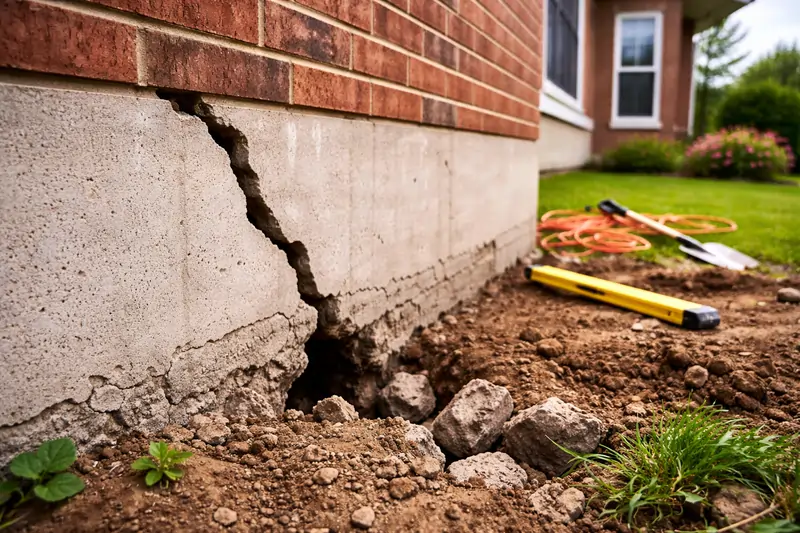
When homeowners first notice a crack in the wall, a sticking door, or a floor that feels a little off, the first question is usually not, “How do I fix this?” It is, “Can this wait?”
That is a completely normal reaction. Raised and slab foundation repairs are typically not the kind of home project people get excited about. Nobody daydreams about scheduling a structural inspection or budgeting for piers, drainage work, or crawl space moisture control. Most people hope the issue will stay small, settle down, or turn out to be cosmetic.
Sometimes a foundation concern really is minor. Hairline shrinkage cracks in concrete, tiny seasonal changes, and older homes with a little character do not always mean the structure is in immediate danger. But the hard part is that many serious foundation problems begin with subtle symptoms. What looks harmless at first can slowly turn into a much bigger and more expensive repair.
So how long can you wait to fix foundation damage?
The honest answer is that it depends on what is causing the damage, how active the movement is, and whether water, soil pressure, or structural load is making the problem worse. In some cases, you may have time to monitor it for a short period. In other cases, waiting can lead to more cracking, more movement, more moisture intrusion, and a much higher repair bill.
The real goal is not to panic the moment you see a crack. The goal is to find out whether the problem is stable or progressing.
Why Waiting Feels Reasonable
Most foundation problems do not announce themselves dramatically. Your house usually does not wake you up in the middle of the night with a loud structural failure. Instead, the warning signs tend to creep in slowly.
You might notice:
- A wall crack over a doorway
- A window that used to open easily but now sticks
- Small gaps forming at trim or baseboards
- Uneven floors in one part of the home
- Brick or stucco cracks on the exterior
- A damp smell in the crawl space or basement
- A corner of the house that just feels “off”
Because these issues often appear gradually, it is easy to push them down the to do list. Life gets busy. The house still stands. Nothing seems urgent. And if the problem has been there for six months already, it is easy to assume another six months will not matter much.
That assumption is where homeowners get into trouble.
Foundation problems tend to follow the same pattern as many other home issues. The sooner you catch the cause, the more options you usually have. Once damage spreads to finishes, framing, flooring, waterproofing, or drainage systems, the repair path gets wider and more expensive.
The Biggest Risk is Not the Crack Itself
A lot of people focus on the visible symptom. They look at the wall crack, the sloping floor, or the gap around a window and wonder whether that exact thing is dangerous.
What matters more is what is driving it.
Foundation damage is often tied to one or more of these underlying conditions:
Soil movement
Expansive soils can swell when wet and shrink when dry. This repeated cycle places stress on foundations over time.
Poor drainage
Water collecting near the home can soften soils, increase hydrostatic pressure, and contribute to settlement or movement.
Crawl space or basement moisture
Persistent damp conditions in a crawl space can affect wood framing, supports, and the overall stability of the structure.
Plumbing leaks
A hidden leak beneath a slab or near the foundation can alter soil conditions and trigger movement.
Tree roots
Large trees can pull moisture from soil unevenly, sometimes contributing to settlement patterns.
Age and construction type
Older homes, raised foundations, and certain slab designs can develop recurring issues depending on how they were built and how well they have been maintained.
In other words, the visible damage is often just the clue. The real concern is the process happening underneath or around your home.
What Can Happen if You Wait Too Long
Some homeowners imagine foundation repair as a simple yes or no issue. Either the house is fine, or it is falling apart. Real life is usually more gradual than that.
Waiting too long can lead to a chain reaction.
A small settlement problem can become a larger leveling issue. A minor crack can widen enough to let in water. A damp crawl space can lead to wood deterioration, musty odors, and added structural stress. Doors and windows can keep drifting out of alignment. Cosmetic damage inside the home can multiply. Flooring, drywall, tile, and trim can all start showing the effects.
Then there is the resale side of things. Foundation concerns do not usually get easier to explain later. If you decide to sell, buyers may see the same signs you ignored, and now you are dealing with them under the pressure of escrow, inspection deadlines, and repair negotiations.
Even when the structure itself is still repairable, delay often reduces your flexibility. Earlier intervention may mean stabilizing the issue before major finish damage occurs. Later intervention may mean repairing the structure plus everything the movement damaged along the way.
When a Short Wait May Be Reasonable
Not every sign of foundation trouble calls for immediate repair work next week.
There are situations where a homeowner may have time to observe the issue, especially after getting a professional opinion. For example, very small non-progressive cracks, limited seasonal movement, or older known conditions that have remained unchanged for years may not require urgent structural work.
The key phrase there is after getting a professional opinion with a foundation inspection.
A short waiting period can make sense when:
- The issue has been evaluated and appears stable
- There is no rapid worsening
- Doors and windows are mostly functioning
- There is no major water intrusion
- No serious structural separation is present
- The home is being monitored with measurements or follow up inspections
That is very different from simply guessing and hoping.
Monitoring only works when you know what you are monitoring. Photos, crack measurements, elevation readings, moisture findings, and a clear baseline matter. Without that, most homeowners are just relying on memory, and memory is not a good structural tool.
Foundation Warning Signs You Should Not Ignore
There are some foundation warning signs that deserve attention sooner rather than later.
If you notice stair step cracking in brick, widening wall cracks, bowing walls, sloping that appears to be getting worse, persistent sticking doors and windows, separation around cabinets or counters, or moisture problems under the home, it is wise to get the structure evaluated.
The same goes for any sudden change.
A crack that has been the same for five years is one thing. A crack that appeared recently and keeps growing is different. A door that has always been a little quirky is one thing. A door that suddenly refuses to latch after heavy rain or a plumbing leak is different.
Homes usually tell a story through patterns. The more active and widespread the pattern becomes, the less sense it makes to wait.
The Cost Question Most Homeowners Are Really Asking
When people ask how long they can wait, they are often asking a financial question.
They want to know whether delaying a repair could help them buy time without making the situation much worse.
That is understandable. Foundation repair is a serious expense. But waiting is rarely neutral. Waiting can cost money in hidden ways even before the actual repair begins.
You may pay more later because:
- The area of damage gets larger
- Interior cosmetic damage spreads
- Water problems worsen
- Repair methods become more involved
- Selling the house becomes more complicated
- Emergency timing removes your ability to shop and plan carefully
A modest stabilization repair done at the right time can be far easier to manage than a larger project after years of movement and moisture issues.
This does not mean every crack becomes a disaster. It means the cheapest time to understand a problem is usually at the beginning.
Different Foundations, Different Timelines
Another reason there is no one size fits all answer is that different homes fail in different ways.
A slab foundation may show cracking, floor movement, or signs of soil related settlement. A raised foundation may show sagging floors, shifting support systems, moisture damage, or settlement at isolated points. Basement and retaining walls can deal with water pressure and lateral movement that create another set of concerns.
That is why timelines vary so much. One home may have a condition that has developed slowly over decades. Another may have an active problem that worsens noticeably in one wet season.
The smartest move is to avoid comparing your home to someone else’s story. Your neighbor may have ignored a crack for ten years without consequence. That does not mean your issue is the same. The pattern, soil, drainage, construction type, and moisture conditions all matter.
Why Moisture Changes the Urgency of Foundation Repairs
If moisture is part of the picture, the timeline usually gets shorter.
Water is one of the most common accelerants of foundation damage. It changes soil behavior, adds pressure, weakens materials, and supports conditions that can lead to wood damage and other structural concerns. In crawl spaces and basements, ongoing dampness can quietly create a bigger issue than homeowners realize.
A home with foundation concerns and moisture intrusion is usually not a good candidate for long term waiting.
Even if full structural repair is not scheduled immediately, moisture control, drainage correction, and related preventive steps may need to happen quickly. If the cause is still actively feeding the damage, delaying everything can be a costly mistake.
What Homeowners Should Do First
The first step is not automatically repair. It is clarity.
Specifically, you’ll want to know:
- What type of foundation do you have?
- What symptoms are cosmetic, and which ones suggest movement?
- Is the issue old and stable, or active and changing?
- Is water part of the problem?
- What happens if you do nothing for six months or a year?
- What repair options exist now, before the problem becomes larger?
That is where a proper foundation inspection becomes valuable. A good inspection should do more than point at cracks. It should connect the symptoms to the likely cause and help you understand the urgency level.
Pinnacle Home Services provides foundation repair, foundation inspection, and moisture control solutions for homes in Sacramento and Northern California, with a focus on thorough evaluations and repair options tailored to the property. The company has been serving the region for over 13 years as a locally owned Sacramento business.
The Danger of Waiting for "Obvious" Foundation Damage
One of the biggest mistakes homeowners make is waiting until the problem feels undeniable.
By the time foundation damage is obvious to everyone who walks into the house, it has often been developing for a long time. Floors may be more noticeably uneven. Wall cracks may be wider. Exterior cracking may be more pronounced. Moisture may have already caused secondary damage. At that stage, you are no longer catching the issue early. You are catching it late.
There is a big difference between overreacting and acting early. Getting a foundation inspection is not overreacting. It is how you avoid making decisions based on fear or denial.
Final Thoughts
If the foundation damage is truly minor and stable, you may have some room to monitor it. If the damage is active, tied to water, worsening with the seasons, or affecting how the house functions, waiting is risky.
A better question than “How long can I wait?” is “What happens if I wait?”
If the answer is that the issue is likely to remain stable, you can plan carefully. If the answer is that movement, moisture, or stress will probably continue, the smartest move is to act sooner while your options are still better.
Foundation issues rarely become less complicated with time. Some stay manageable for a while. Many do not. The earlier you understand the cause, the better your chances of protecting the home, controlling repair costs, and avoiding the kind of damage that spreads quietly until it is impossible to ignore.
If you are seeing cracks, sloping floors, sticking doors or windows, or moisture under the home, the safest next step is to get the foundation evaluated and learn whether you are dealing with a watch and monitor situation or a repair now situation. That answer is what determines how long you can wait.