
If you own a home with a crawl space in Sacramento or elsewhere in Northern California, moisture under the house is something worth paying attention to before it turns into a bigger problem. A lot of homeowners do not think about the crawl space until they notice a musty smell, soft floors, cupping hardwood, or signs of wood damage under the home. By then, the moisture issue has often been around for a while.
One of the most common recommendations for crawl space moisture control is a vapor barrier. The problem is that many homeowners are not fully sure what a vapor barrier does, when it is needed, or how it differs from other options like crawl space encapsulation. That confusion is understandable. These terms get thrown around a lot, and some companies make every crawl space sound like it needs the most expensive system possible.
In reality, the right answer depends on the home, the moisture source, and the local conditions. In the Sacramento region, a vapor barrier is often one of the most practical and effective ways to reduce crawl space moisture. Full encapsulation has its place, but many homes here do not need that level of treatment.
What is a Crawl Space Vapor Barrier?
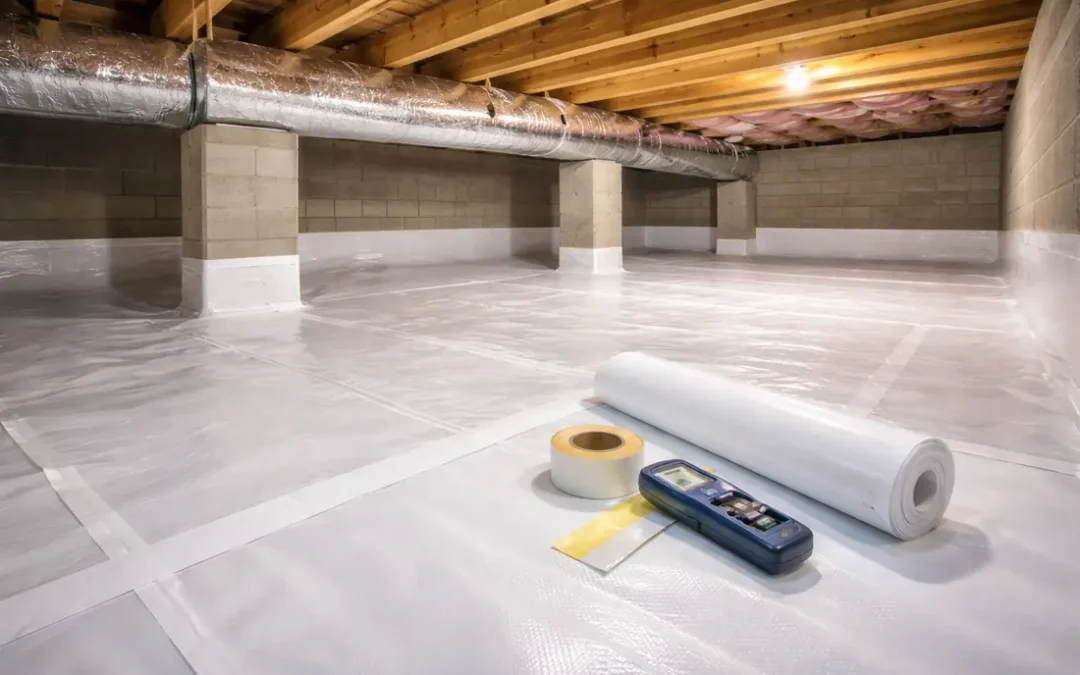
A crawl space vapor barrier is a heavy plastic sheeting (6-mil to 20-mil thick) installed over the exposed soil beneath the house. Its main job is to reduce the amount of moisture vapor that rises from the ground into the crawl space air.
That matters more than many people realize. Even when there is no standing water under the home, bare soil can still release a surprising amount of moisture. Over time, that moisture can collect in the crawl space and affect the wood framing, insulation, subfloor, and overall air quality below the house.
A properly installed vapor barrier helps create separation between the earth and the crawl space environment. It is a straightforward solution, but it can make a major difference when ground moisture is one of the main issues.
Why Crawl Space Moisture Matters in Sacramento and Northern California
People do not always associate Sacramento with crawl space moisture problems because this is not the Deep South or the Pacific Northwest. But crawl spaces here deal with their own version of moisture stress, and it can be tough on older homes in particular.
In this region, homes often go through long dry periods followed by winter rain, then irrigation season, then warm weather that can trap humid air under the house. Moisture can build up from below even when the yard looks dry on the surface. Add in poor drainage, sprinkler overspray, roof runoff near the foundation, plumbing leaks, or old venting layouts, and the crawl space can stay damp longer than it should.
This is especially common in older Sacramento neighborhoods with raised foundation homes. Many of these houses were built long before modern crawl space moisture control was standard. The crawl space may have exposed dirt, old insulation, signs of past water intrusion, or wood that has been dealing with seasonal moisture for decades.
What Problems Can a Vapor Barrier Help Prevent?
A vapor barrier is not just about making the crawl space look cleaner. It can help address conditions that quietly contribute to larger issues inside and beneath the home.
When excessive moisture is allowed to rise from the soil, it may contribute to:
- Musty odors inside the house
- Damp or darkened wood framing
- Sagging or damaged insulation
- Conditions that support mold or fungal growth
- Wood rot over time
- Higher humidity in the crawl space
- A less healthy environment beneath the home
In some houses, crawl space moisture can also play a role in soft or uneven floors. If the floor system stays damp for too long, wood members can weaken or deteriorate. That does not mean every soft floor is caused by moisture alone, but it is often part of the larger picture and could lead to raised foundation repairs.
Do You Actually Need a Vapor Barrier?
In parts of Sacramento and Northern California homes, yes, a vapor barrier is a smart idea. If your crawl space has exposed soil and little to no moisture protection, there is a strong chance that adding a vapor barrier would help with excessive moisture buildup.
That is especially true if you have noticed any of the following:
- A musty smell indoors
- Damp crawl space air
- Bare dirt under the home
- Visible moisture staining on wood
- Insulation falling down
- Signs of past water intrusion
- A raised foundation home with older construction
Still, it is important not to treat the vapor barrier like a magic fix. It works best when the main problem is moisture vapor coming up from the ground. If the crawl space is taking on water during storms, or if there is a plumbing leak, or if exterior drainage is poor, those issues need to be corrected too.
The best approach is to look at the crawl space as a system. Ground moisture is one part of it. Drainage, ventilation, grading, leaks, and structural condition matter too.
How a Vapor Barrier Differs From Full Crawl Space Encapsulation
This is where homeowners often get mixed messages.
A vapor barrier and a full crawl space encapsulation are not the same thing. A vapor barrier usually refers to the plastic material placed over the exposed dirt floor to reduce moisture vapor rising from the soil. It is a targeted moisture control step and, in many Sacramento homes, it handles the bulk of the problem when installed properly and combined with good drainage practices.
Full crawl space encapsulation is a much more involved system. It usually includes sealing the ground, extending liner material up foundation walls, sealing seams, addressing vents, and in some cases adding dehumidification or drainage components. The goal is to control the crawl space environment much more completely.
In very humid regions, or in homes with severe and persistent crawl space moisture, encapsulation can make sense. But Sacramento homes generally do not need full encapsulation in most cases. Around here, a moisture barrier usually handles most of the common crawl space moisture issues, especially when the main source is ground vapor rather than ongoing water intrusion.
That point matters because homeowners are sometimes sold on the idea that every crawl space needs the most aggressive system available. That is simply not true. In this region, many crawl spaces respond well to a properly installed vapor barrier along with sensible supporting corrections, such as improving drainage, extending downspouts, fixing leaks, or adjusting irrigation.
Encapsulation may still be appropriate in select cases, such as a crawl space with chronic dampness, unusual humidity, repeated water entry, or more serious air and moisture management problems. But for many Northern California homes, starting with a vapor barrier and a real plan based on foundation inspection findings is the more practical path.
When a Vapor Barrier Alone May Not be Enough
There are times when a vapor barrier is helpful, but not sufficient on its own.
If water actually enters the crawl space during rain events, the first concern may be drainage. If the yard slopes toward the home, if downspouts empty near the foundation, or if sprinklers constantly soak the perimeter soil, those problems need attention. If there is an active plumbing leak, that has to be fixed. If wood damage is already present, repairs may be needed in addition to moisture control.
This is where a good inspection becomes important. A real crawl space assessment should not stop at saying, you need plastic on the ground. It should identify why the moisture is there, what it has affected, and whether the structure is showing any signs of related distress.
What Should a Good Crawl Space Inspection Look For?
A thorough crawl space inspection should evaluate more than just the surface appearance of the area. It should look at the full moisture picture and how it may connect to the home above.
That usually includes checking:
- Whether the crawl space has exposed soil
- Signs of excess humidity or condensation
- Water staining on framing or piers
- The condition of beams, joists, and subflooring
- Whether insulation is damp, detached, or deteriorated
- Plumbing leaks or drain line issues
- Exterior drainage patterns
- Vent placement and overall air movement
- Whether there are signs of settlement, movement, or weakened framing
This type of inspection is part of the value of working with a local company that understands both structural concerns and regional moisture patterns. Pinnacle Home Services has served Sacramento and Northern California for over 13 years, with a focus on foundation inspection, repair, and crawl space moisture control. That kind of local experience matters because the right recommendation should fit the way homes in this region are actually built and the issues they typically face.
What Should a Good Crawl Space Inspection Look For?
Advice about crawl spaces can get very generic online. A lot of articles are written as if every house in America deals with the same climate and the same structural conditions. That is not how it works in real life.
Homes in Sacramento, Stockton, Yuba City, Roseville, Folsom, and surrounding Northern California communities often have raised foundations, older framing, seasonal moisture cycles, and irrigation patterns that create their own set of crawl space challenges. A recommendation that makes perfect sense in a swampy region or coastal climate may be excessive for a house in inland Northern California.
That is why homeowners should be wary of blanket statements. Some crawl spaces truly need more extensive work. Many do not. The goal should be to solve the actual moisture problem without overselling the solution.
Final Thoughts
So, do you need a vapor barrier in your crawl space?
For many Sacramento and Northern California homes, the answer is yes. If you have exposed dirt beneath the home, a vapor barrier is often one of the most effective ways to reduce ground moisture and protect the crawl space environment. It can help lower humidity, reduce musty odors, protect wood framing, and support a healthier area beneath the house.
The more important question is whether a vapor barrier is enough by itself. In many cases here, it is either the full answer or at least the core of the answer. Sacramento homes generally do not need full crawl space encapsulation in most situations, because a moisture barrier usually handles most of the common issues. But if there are drainage failures, plumbing leaks, repeated water intrusion, or existing structural damage, those conditions need to be addressed too.
The best way to know what your home needs is to start with a proper inspection. A crawl space should be evaluated based on its actual moisture sources, not a generic sales pitch. When the problem is diagnosed correctly, the solution is usually much clearer, and often much more practical, than homeowners expect.