
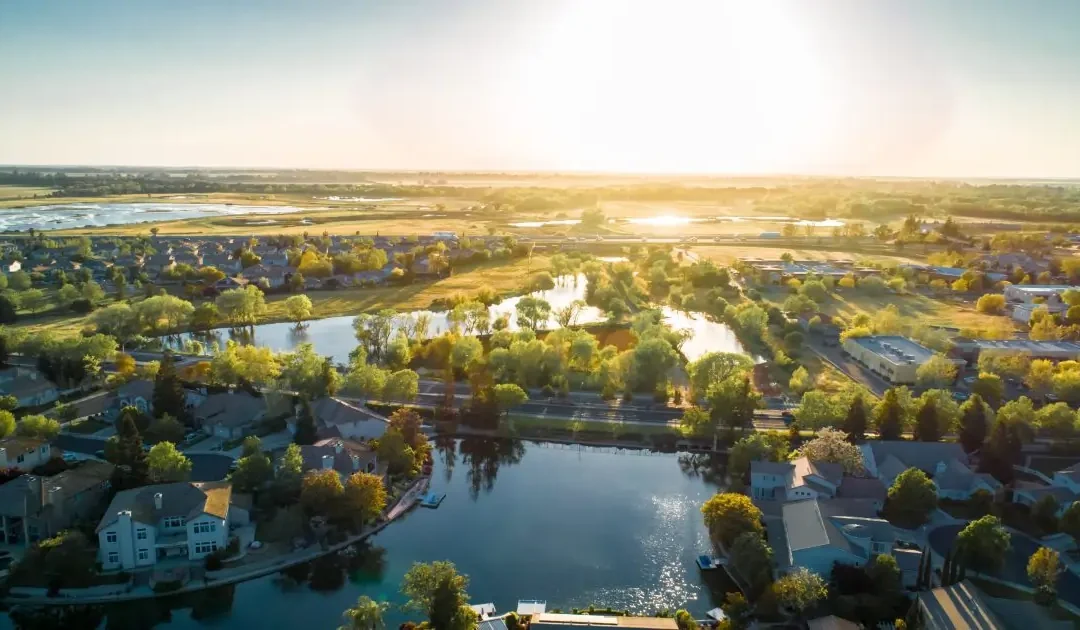
Drive through the manicured subdivisions of Elk Grove, from the established streets of Laguna West to the newer developments in East Franklin or near Stonelake, and you see picture-perfect suburban living. The homes look solid, built mostly in the last 20 to 30 years.
But for many Elk Grove homeowners, a different picture is forming inside.
Perhaps you’ve noticed a hairline fracture snaking across the tile in your entryway. Maybe the door to the master bedroom sticks every July but closes fine in January. Or perhaps you pulled back a corner of the carpet for cleaning and found a jagged crack in the concrete subfloor beneath.
If you are experiencing these issues, you are not alone. You are a victim of Elk Grove’s geological geography.
While many homeowners assume foundation problems only plague century-old homes in areas like East Sacramento, the truth is that newer slab-on-grade homes in Elk Grove face a unique, powerful threat buried right under their feet: highly expansive clay soil.
Understanding why your slab is cracking is the first step toward fixing it permanently. This guide will take you beneath the surface of Elk Grove to explain the mechanics of soil movement and how it pressures your home’s foundation.
The "Silent Hazard" Beneath Laguna and East Franklin
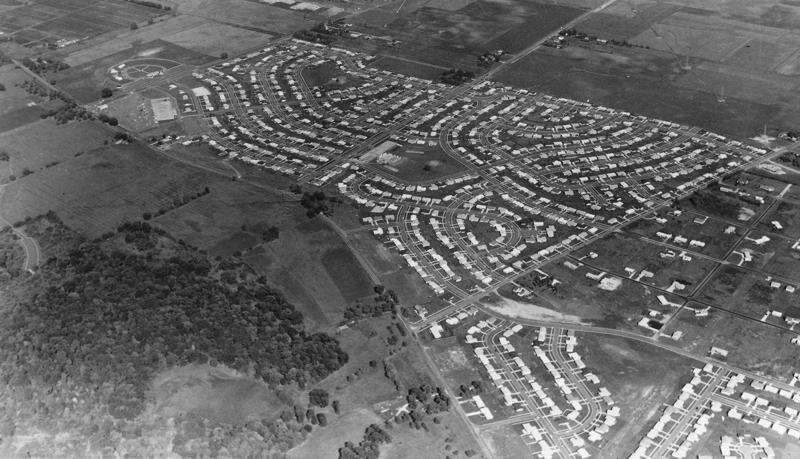
Before the housing boom of the 1990s and 2000s, much of the land stretching from I-5 across Highway 99 was floodplain, agricultural land, and grazing pastures. The soil that made this area lush for farming is the exact same soil that is terrible for supporting rigid concrete structures.
Elk Grove sits largely on adobe clay. Geotechnical engineers refer to this as “expansive soil.” A simpler way to think of it is a giant, dense sponge buried under your house.
The Mechanics of the “Clay Sponge”
Clay particles are incredibly small and flat, stacking together like sheets of paper. Unlike sandy or loamy soil, which allows water to pass through quickly, clay traps water between these tiny sheets.
- When it gets wet (Winter): The clay absorbs water and pushes those sheets apart, causing the soil volume to expand dramatically. It can swell with enough force to lift a concrete slab.
- When it dries out (Summer): The water evaporates, the sheets collapse back together, and the soil volume shrinks. It cracks, pulls away from structures, and creates deep voids.
In some parts of Elk Grove, the soil can swell by as much as 10% to 15% between seasons. While that percentage sounds small, when multiplied across the thousands of square feet under your home, it translates to massive, powerful movement.
The "Yo-Yo Effect": How Sacramento Seasons Break Concrete
Unfortunately, Elk Grove’s climate guarantees that the ground it sits on will never stay flat. We have hot, bone-dry summers and wet, prolonged winters. This creates a seasonal “yo-yo effect” that wreaks havoc on slab foundations.
The Summer Shrink (Settlement)
By August in Elk Grove, it likely hasn’t rained significantly in months. The sun bakes the perimeter of your home, and mature trees (even those far from the house) suck remaining moisture from deep underground.
The clay soil under the edges of your foundation dries out first and shrinks away. This leaves the outer edges of your concrete slab hanging in mid-air with no support. Meanwhile, the soil deep under the center of the house, protected from the sun, stays moister and higher.
Your house is now “high-centered,” balancing on a hump of dirt in the middle while the edges droop. The weight of your exterior walls presses down on those unsupported edges until the concrete snaps. This is often called “differential settlement.”
The Winter Heave (Uplift)
When the atmospheric rivers arrive in winter, the process reverses. The dry cracks in the clay fill with water, and the soil swells violently.
Often, the perimeter of the home swells faster than the center. The expanding clay pushes upward on the edges of your slab, lifting the walls. This creates a “dishing” effect, bending the slab upward at the edges until it cracks through the middle to relieve the pressure.
Year after year, this cycle of lifting and dropping fatigues the concrete until structural failure occurs.
Slab-on-Grade vs. Post-Tension: The Elk Grove Challenge
Many Elk Grove homeowners ask us, “My house was built in 2005; don’t I have a ‘better’ foundation?”
It is true that building codes improved over time. Most homes built in Elk Grove during the last three decades use a Post-Tension Slab.
Instead of just using rebar, builders laid high-strength steel cables in a grid pattern inside the wet concrete form. Once the concrete cured, they tightened these cables using hydraulic jacks to dozens of tons of pressure. This compresses the slab, making it stronger and more resistant to cracking than a traditional rebar slab.
However, post-tension slabs are not invincible.
They are designed to resist uniform soil movement. If the entire house lifts slightly and drops slightly together, the slab holds. But the expansive clay in areas like Laguna Creek often moves unevenly due to drainage issues, tree roots, or plumbing leaks.
If the differential movement between one corner of the house and another becomes too extreme, even a post-tension slab will snap. Furthermore, if you see a rusty metal end poking out of your garage footing, that is a tension cable. If those cables corrode and snap due to moisture intrusion, your slab loses its structural integrity immediately.
Is it Just "Settling" or a Serious Problem?
Here are the signs that the movement is more than just cosmetic:
1. The “Quarter” Test for Slab Cracks
Hairline cracks in a garage floor are common. But if you have a crack in your interior slab (under carpet or tile) that is wide enough to fit the edge of a quarter into, or if one side of the crack is significantly higher than the other (offset), that is a sign of structural upheaval or settlement.
2. Seasonal Doors and Windows
Do you have interior doors that rub the frame in summer but swing freely in winter? Do you see daylight gaping at the top of a window frame? This means the framing of your house is being twisted as the slab beneath it bends. Wood framing is flexible; concrete slabs are not.
3. Gaps at Baseboards and Cabinetry
Look at the floor in your kitchen. Are your baseboards suddenly hovering half an inch above the floor? Are there gaps opening up between your kitchen island and the tiled floor? This usually means the slab edge is sinking, pulling away from the interior structures.
4. Exterior Stucco and Brick Cracks
Walk the perimeter of your home. Look for “stair-step” cracks in brick veneer or long diagonal cracks in the stucco radiating from the corners of windows and doors. These are stress points indicating the wall is moving.
Why "Watering Your Foundation" Is Rarely Enough
If you talk to longtime neighbors in Sacramento County, they will inevitably advise you to “water your foundation” during the summer. The idea is to run a soaker hose around the perimeter to keep the clay damp and prevent it from shrinking.
While this is a decent preventative maintenance strategy for a healthy foundation, it has severe limitations once damage has occurred:
- It’s Impossible to Be Even: You cannot evenly hydrate the soil under the center of the slab compared to the edge. You may end up causing more differential movement by over-watering one spot.
- It Doesn’t Fix Cracks: Once concrete has snapped, no amount of water will fuse it back together. The structural integrity is compromised.
- The Drought Reality: In severe drought years, watering restrictions may make it impossible to keep Elk Grove’s thirsty clay satisfied.
Watering manages the symptom, but it doesn’t cure the underlying geological disease.
Conclusion: The Soil Won't Stop Moving, But Your Home Can
Living in Elk Grove offers a wonderful quality of life, but it requires accepting the reality of the ground beneath us. The expansive clay soil in our region is a powerful, relentless force of nature.
If you are seeing the warning signs of slab fractures in your home, hoping the problem will go away when the seasons change is a risky strategy. The cycle of shrink and swell will continue every year, wearing down your foundation’s resistance.
The good news is that modern engineering offers permanent solutions. Through methods like steel pier underpinning (to stabilize sinking slabs) or structural crack stitching (to mend broken concrete), your home can be disconnected from the volatility of the clay soil.
Don’t let the hidden enemy beneath your floorboards devalue your biggest investment. If you suspect your home is shifting, the most effective way to protect your property is to seek a professional evaluation for foundation repair in Elk Grove. An expert foundation inspection is the only way to determine if your cracks are merely cosmetic or a sign of the notorious Elk Grove clay claiming another victory over your home’s structural integrity.