

It is one of the first questions homeowners ask after they notice wall cracks, sloping floors, or signs that the house may be shifting. The honest answer is that sometimes it does, but most of the time it depends on what caused the damage.
In general, homeowners insurance is meant to cover sudden and accidental events. It is not usually there to pay for problems that develop slowly over time. That is why foundation damage from a burst pipe might be covered, while damage from settling soil or long-term moisture problems usually is not.
If you are dealing with foundation concerns, it helps to understand where the line is between a covered event and a denied claim.
How Homeowners Insurance Usually Looks at Foundation Damage
Most standard policies cover damage caused by a specific event. They do not usually cover wear and tear, neglected maintenance, or natural settling.
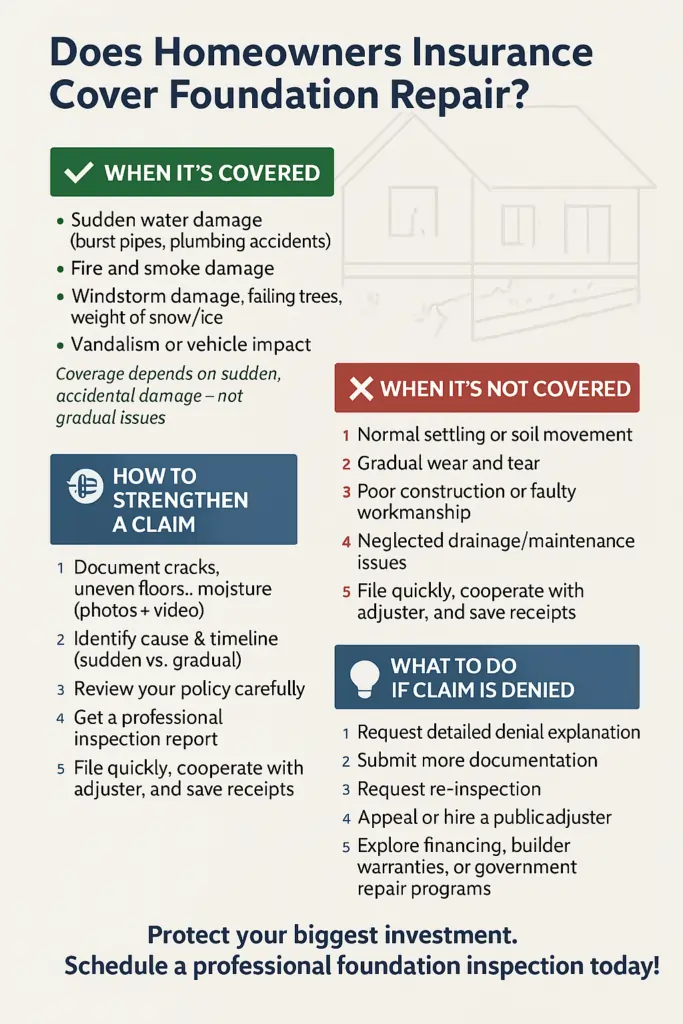
That means there may be coverage if your foundation was damaged by something sudden, such as:
- a burst pipe or plumbing failure
- a fire
- a windstorm or fallen tree
- vandalism
- a vehicle impact
On the other hand, claims are often denied when the damage is tied to gradual movement or long-term conditions. Common exclusions usually include soil movement, erosion, poor workmanship, construction defects, drainage issues that were never corrected, and damage related to flooding or earthquakes unless separate coverage is in place.
That is where many homeowners get frustrated. They see real structural damage, but the insurance company focuses on the cause, not just the repair bill.
When Foundation Repair May Be Covered
Coverage is most likely when the damage happened because of a sudden event.
A good example is a plumbing leak or burst pipe under or near the home. If the pipe failed unexpectedly and the soil shifted quickly as a result, there may be a valid claim.
Fire damage is another situation where coverage may apply. Even if the foundation itself did not burn, the heat and structural stress can still affect it.
Severe weather can also lead to a covered claim in some cases. High winds, falling debris, or a tree striking part of the structure may create foundation damage that was not there before. The same idea applies to vandalism or a vehicle hitting the home.
In these situations, the key issue is usually whether the damage was sudden and tied to a covered peril.
When Foundation Repair Usually Is Not Covered
Most denied foundation claims fall into a few familiar categories.
If the home has been settling over time, insurance usually will not pay for that. The same goes for foundation cracks that slowly worsened because of moisture, poor drainage, or expansive soil. These are often treated as maintenance or long-term structural conditions rather than insurance events.
Damage caused by bad construction or poor repairs is also commonly excluded. If the problem goes back to workmanship, the insurer may say it is not their responsibility.
Flooding and earthquakes are two more big ones. Standard homeowners insurance typically does not cover those causes unless you bought separate protection for them.
So if you are asking whether homeowners insurance covers foundation repair, the better question is often this: what caused the damage in the first place?
How to Tell if You Might Have a Claim
Start by looking at the timeline.
Did the foundation damage appear right after a major event, like a pipe break, storm, or fire? Or has it been getting worse little by little over months or years?
That difference matters a lot.
Take clear photos and videos of anything you are seeing, including cracks, sticking doors, uneven floors, or water intrusion. Write down when you first noticed the issue and whether anything unusual happened right before it appeared.
Then review your policy and see what causes of loss are covered and what exclusions apply. If the language is confusing, that is normal. A lot of homeowners do not realize how narrow foundation repair coverage can be until they are already dealing with damage.
It also helps to have the property inspected by a foundation professional. A good inspection can help identify whether the issue looks sudden, ongoing, or related to something like drainage, soil movement, or plumbing. That information can make a big difference if you decide to file a claim.
How to File a Stronger Claim
If you think the damage may be covered, report it as soon as possible. Waiting too long can make things harder.
Document everything. Save photos, notes, repair invoices, leak reports, and anything else that helps connect the damage to a specific event. If your insurer sends an adjuster, be prepared to walk them through what happened and when you first noticed the problem.
It is also smart to get a repair estimate and written findings from a licensed foundation contractor. In some cases, homeowners are denied at first but have a stronger case once better documentation is provided.
Even then, approval is never guaranteed. Foundation claims are often heavily scrutinized, especially when the insurer believes the issue has been developing for a long time.
What to Do if Insurance Will Not Cover It
A denied claim does not change the fact that the foundation still needs attention.
If coverage is not available, you may still have a few options. Some homeowners use financing through the repair company. Others may have a builder warranty if the home is newer. Depending on the situation, separate policies for flood, earthquake, sewer backup, or service lines may help with future risks, even if they do not solve the current one.
The most important thing is not to ignore the damage just because the claim did not work out. Foundation issues tend to become more expensive when they are left alone.
The Best Way to Protect Yourself Going Forward
The truth is that prevention does more for most homeowners than insurance does.
Keep water moving away from the house. Maintain gutters and downspouts. Watch for pooling water near the foundation. Pay attention to new cracks, sticking windows, or changes in the floor. Small warning signs are easier and cheaper to deal with when caught early.
A foundation inspection can also help you understand whether you are looking at cosmetic movement, normal settling, or something more serious.
Final Thoughts
So, does homeowners insurance cover foundation repair?
Sometimes, yes. But only when the damage is tied to a sudden covered event. In many other cases, including settling, long-term moisture issues, neglected maintenance, and soil movement, the answer is usually no.
That is why the cause matters just as much as the damage itself.
If you are seeing signs of foundation trouble, start by getting clear answers. A professional foundation inspection can help you understand what is happening, whether an insurance claim is worth pursuing, and what repairs may actually be needed.